Merchant Query Patterns Catalyzing Security Refinements in Multi-Channel Payment Systems
Written by Felix Vogel · Nov 10, 2026
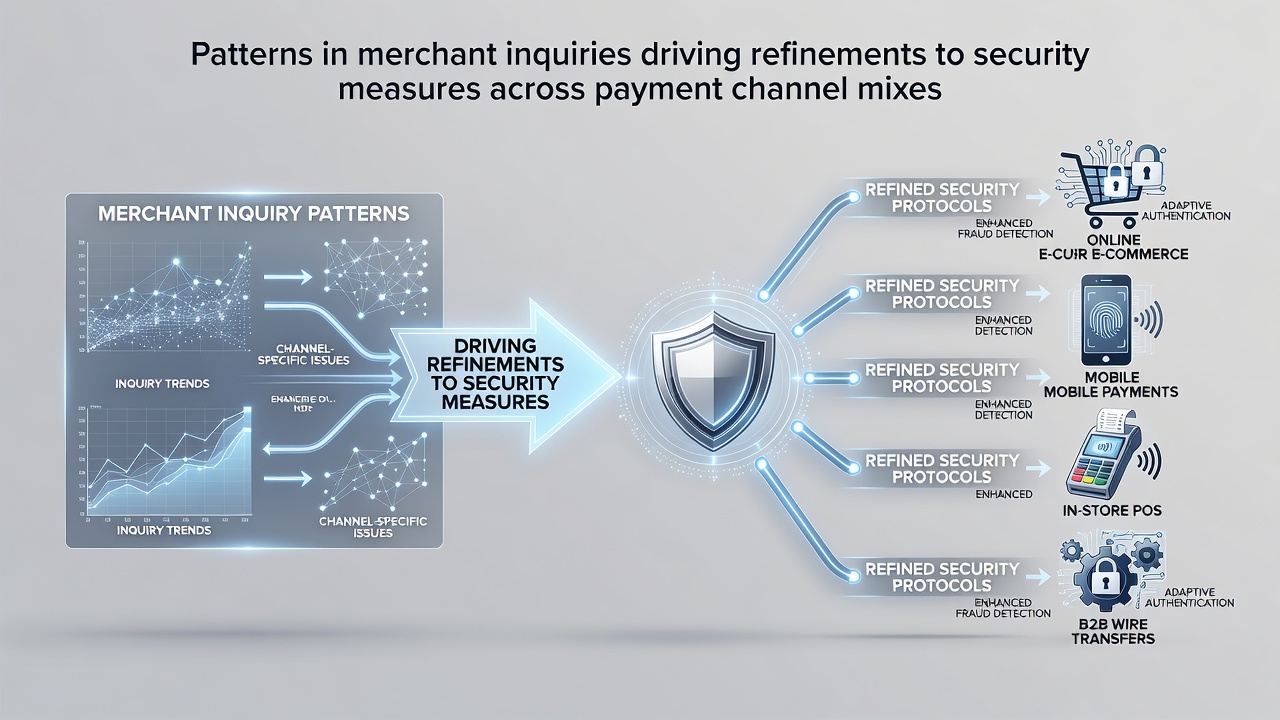
Merchant Query Patterns Catalyzing Security Refinements in Multi-Channel Payment Systems
Merchant inquiries about transaction declines, authentication failures, and compliance gaps have long fed into iterative security adjustments across payment environments that blend in-person terminals with digital gateways and mobile apps. Data from support logs shows recurring questions on tokenization mismatches and encryption protocols often precede targeted refinements in how systems handle mixed-channel traffic. Researchers tracking these patterns note that clusters of similar queries from retailers using hybrid setups frequently align with subsequent releases of updated firmware or API endpoints designed to close identified loopholes.
Tracing Inquiry Clusters to Channel-Specific Adjustments
Payment processors collect thousands of merchant questions each quarter on topics ranging from PCI DSS scoping in omnichannel environments to real-time fraud alerts that trigger across different devices. When patterns emerge around repeated concerns over EMV contactless fallbacks in retail locations paired with online checkout flows, engineering teams prioritize patches that strengthen session management between those points. Observers have documented cases where spikes in inquiries about cross-channel data leakage led directly to enhanced logging requirements in gateway configurations during the latter half of 2025.
Those monitoring support databases report that merchants operating tiered pricing models with both countertop devices and hosted payment pages generate distinct query volumes around key rotation schedules and certificate management. These volumes correlate with later introductions of automated certificate renewal features that reduce manual intervention points. Figures from industry tracking services indicate such refinements appeared in multiple vendor roadmaps after sustained feedback periods exceeded six months.
Role of Aggregated Feedback in Protocol Evolution
Aggregated inquiry data reveals concentrations around authentication friction in environments mixing legacy terminals with newer cloud-based authorization services. Experts analyzing these concentrations have linked them to adjustments in challenge-response mechanisms that accommodate varying latency profiles without weakening overall verification standards. In November 2026, several processor announcements referenced internal query analytics as drivers for rolling out refined risk-scoring models that apply uniformly yet adapt to channel-specific inputs.
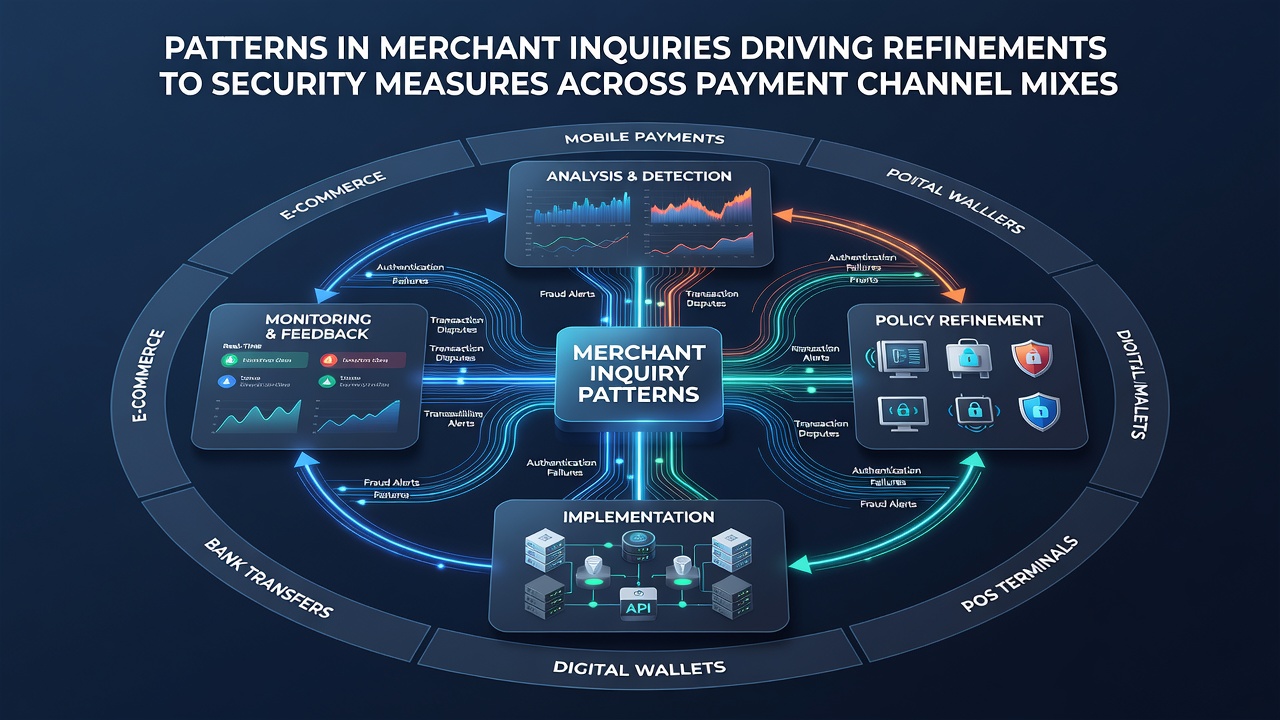
One documented pathway involves merchants flagging inconsistencies in address verification responses when the same card moves between physical and digital channels; subsequent updates tightened matching algorithms while preserving throughput rates. Studies from payment research groups show these changes reduced certain decline categories by measurable margins in follow-up reporting periods. The process typically begins with ticket categorization, moves through pattern recognition algorithms, and concludes with controlled deployment of revised security controls tested against representative channel mixes.
Geographic and Regulatory Influences on Refinement Cycles
Regional variations appear in how inquiry patterns translate into action, with North American merchants raising frequent points about integration with existing terminal fleets while European operators focus more on strong customer authentication timing across apps and websites. Reports from the Federal Reserve highlight that such regional clusters often accelerate the introduction of modular security components capable of selective activation based on merchant location and channel usage. European Central Bank publications similarly note correlations between aggregated compliance queries and updates to dynamic linking requirements in multi-channel transactions.
Industry organizations tracking these developments emphasize that query volume alone does not dictate changes; instead, the intersection of inquiry frequency with actual incident data determines priority. When merchants repeatedly ask about reconciling PCI scope across newly added mobile channels and established POS networks, the resulting refinements often include clearer segmentation tools and automated scope-mapping utilities. Data from 2025 deployments indicates these tools shortened assessment timelines for many mid-sized retailers.
Monitoring Ongoing Query Streams for Future Adjustments
Continuous analysis of merchant support interactions continues to surface emerging themes around API rate limiting during peak fraud events that span multiple channels simultaneously. Processors respond by refining throttling rules and notification protocols that maintain service availability while preserving detection sensitivity. Those reviewing longitudinal datasets observe that sustained inquiry streams around these areas precede incremental improvements released in staged updates rather than single large revisions.
Conclusion
Patterns within merchant inquiries function as early indicators that guide targeted security refinements across the spectrum of payment channel combinations. Aggregated data from support interactions informs decisions on encryption updates, authentication enhancements, and compliance tooling that address real operational friction points. As query streams evolve with new device types and regulatory expectations, the resulting adjustments maintain alignment between merchant needs and protective measures in blended retail environments.