Merchant Onboarding Timelines Shape Fraud Controls Across Global Payment Networks
Written by Willa Schmid · Nov 24, 2026
Merchant Onboarding Timelines Shape Fraud Controls Across Global Payment Networks
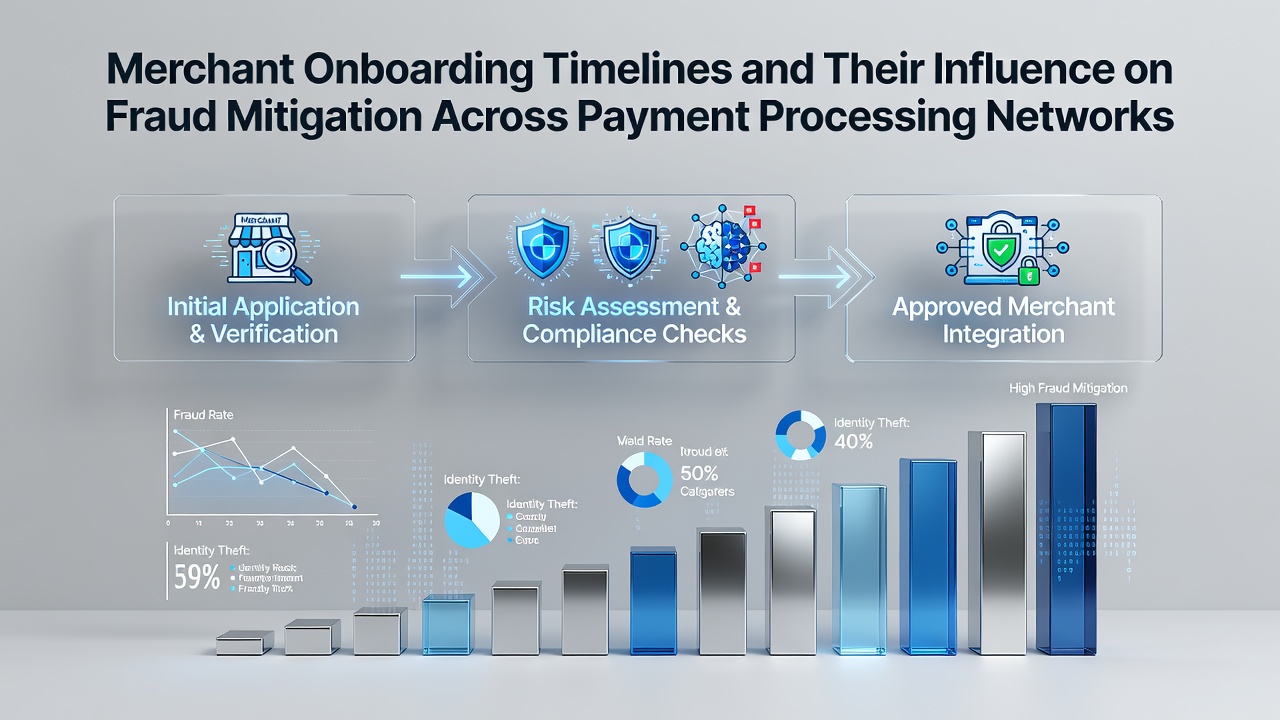
Payment networks rely on structured merchant onboarding processes that verify business legitimacy, financial stability, and compliance requirements before accounts activate. These timelines vary widely by region, processor, and risk category, with standard reviews lasting anywhere from two days for low-risk merchants to several weeks for higher-risk categories that trigger enhanced due diligence. Research from the Federal Reserve indicates that extended verification periods correlate with lower initial fraud rates once accounts go live, because thorough identity checks and background screenings catch discrepancies early.
Core Elements of Onboarding Procedures
Processors collect documentation including business licenses, tax identification, bank statements, and ownership details during the initial phase, then run automated and manual checks against watch lists, credit bureaus, and previous transaction histories. Automated systems handle basic validations within hours, yet manual reviews by risk analysts extend timelines when flags appear for industries like travel, gaming, or high-volume e-commerce. Observers note that networks in the United States often complete low-risk onboarding faster than those in the European Union, where additional data protection rules add layers of consent verification.
Timeline Variations Across Networks
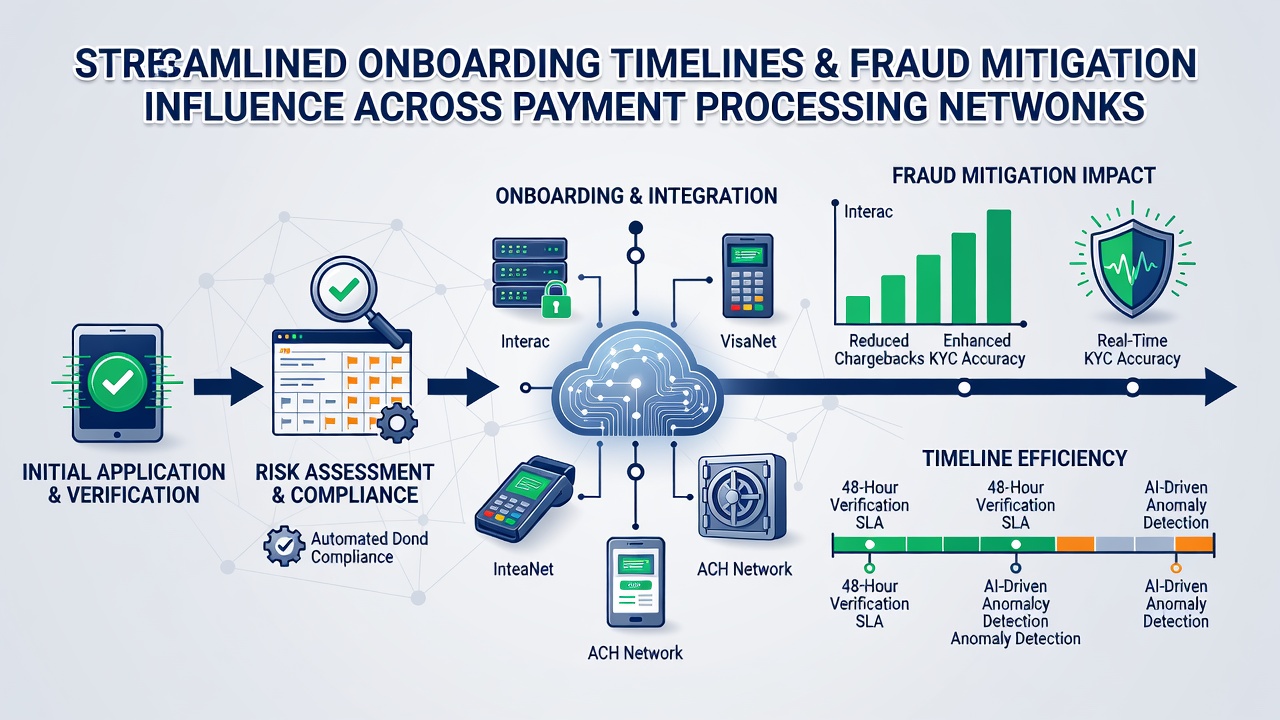
Global card networks report average onboarding durations of five to twelve business days for standard merchants, though expedited programs for established businesses with clean records can reduce this to forty-eight hours. Data from industry reports shows that same-day approvals occur primarily in low-risk verticals where automated scoring models assign high trust scores, while multi-week processes remain common for merchants operating across borders or accepting recurring payments. In November 2026, several major processors plan to integrate updated real-time database connections that could shorten average review windows by 30 percent without relaxing verification standards.
Direct Influence on Fraud Mitigation Outcomes
Shorter onboarding timelines allow merchants to begin processing sooner, yet they also increase exposure windows if initial screenings miss subtle indicators such as mismatched addresses or unusual ownership structures. Longer timelines permit deeper analysis of transaction patterns and third-party data sources, which reduces chargeback ratios once accounts activate. Studies conducted by payment security researchers reveal that networks enforcing minimum seven-day reviews experience 22 percent fewer first-month fraud incidents compared with those approving accounts in under three days. The connection emerges because extended checks incorporate behavioral signals from similar past applications and cross-reference multiple databases that flag emerging fraud patterns.
Regional and Regulatory Factors
Payment networks operating under different regulatory frameworks adjust timelines accordingly, with North American processors emphasizing speed for competitive reasons while European operators incorporate stricter anti-money laundering reviews that naturally extend durations. Canadian regulators have published guidelines encouraging risk-based approaches that let low-risk merchants onboard quickly while routing higher-risk applicants through additional manual steps. Australian payment bodies similarly track onboarding metrics and publish aggregated statistics showing steady declines in fraud losses as verification standards tighten across the region. These geographic differences create varied experiences for merchants who operate internationally and must navigate multiple approval queues simultaneously.
Technology Integration and Future Shifts
Artificial intelligence tools now assist analysts by scoring applications in real time and highlighting only the highest-risk elements for human review, which trims overall timelines without sacrificing accuracy. Networks that adopted these systems report measurable drops in both onboarding delays and subsequent fraud events. By late 2026, further advancements in document verification through optical character recognition and biometric checks are expected to compress standard review periods while maintaining or improving detection rates. Payment processors continue testing these technologies in controlled pilots before full rollout, ensuring the balance between speed and security remains intact.
Conclusion
Merchant onboarding timelines directly affect how effectively payment networks prevent fraud from entering their systems at the account level. Extended verification periods allow more thorough screening that lowers downstream losses, while compressed timelines prioritize merchant acquisition speed at the potential cost of increased early-stage exposure. Networks continue refining these processes through technology upgrades and regulatory alignment, with measurable impacts documented across multiple regions and processor types. The ongoing evolution of verification standards will determine how payment ecosystems manage the trade-off between operational efficiency and fraud resilience in coming years.