Beyond the Terminal: How Support Timelines Shape Fraud Controls in Tiered Merchant Account Structures
Written by Finley Meier · Oct 27, 2026
Beyond the Terminal: How Support Timelines Shape Fraud Controls in Tiered Merchant Account Structures
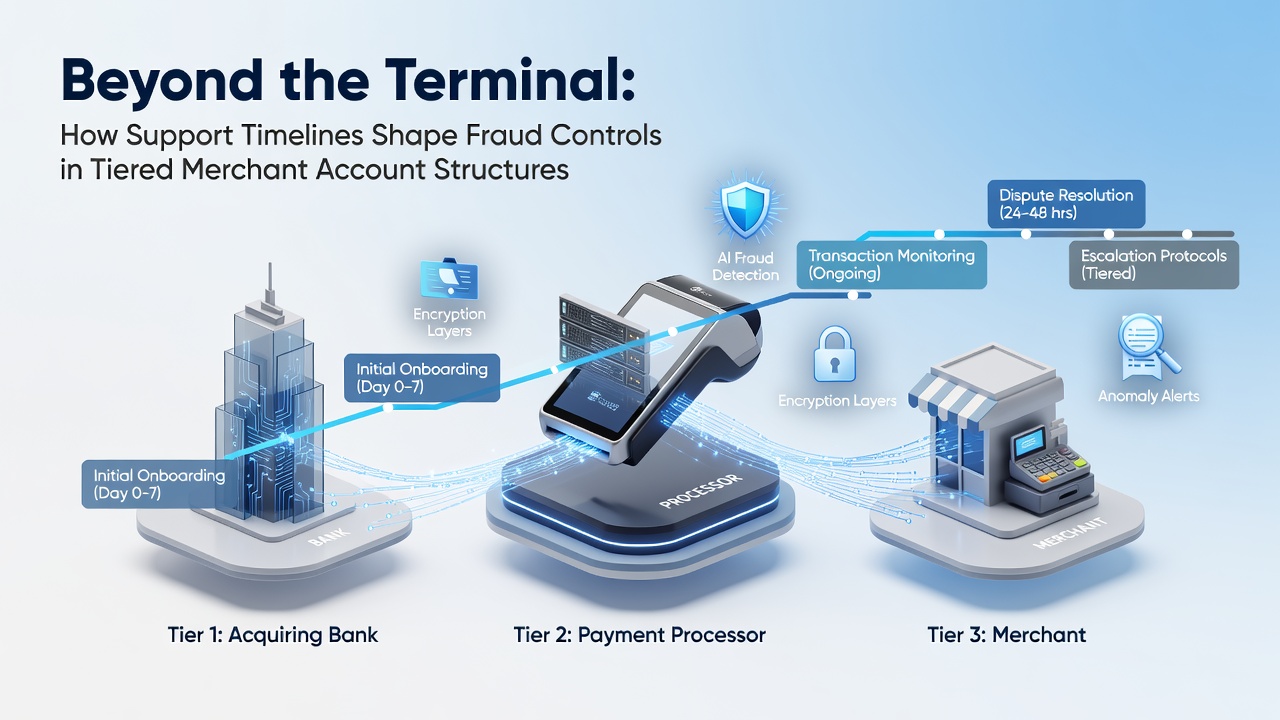
Merchant account structures often divide businesses into risk-based tiers that determine processing fees alongside the intensity of fraud monitoring protocols, and support timelines play a direct role in how quickly those controls adapt to emerging threats. Data from payment networks shows that merchants in elevated risk categories receive extended maintenance windows for security patches, while lower-tier accounts operate under shorter cycles that prioritize rapid deployment of basic monitoring tools.
Defining Tiered Merchant Account Structures
Payment processors categorize accounts according to transaction volume, chargeback ratios, and industry type, which creates distinct levels where fraud controls scale accordingly. Lower tiers typically feature streamlined verification steps and fixed monitoring intervals, whereas higher tiers incorporate layered authentication plus continuous review processes. Research indicates that these divisions emerged as processors sought to balance operational costs with risk exposure across diverse retail environments.
Support timelines intersect with these tiers because providers allocate resources based on contract terms, and extended windows allow for deeper integration of fraud detection algorithms. Observers note that accounts with prolonged support commitments experience fewer gaps in alert systems during peak fraud periods, since updates roll out in coordinated phases rather than rushed sequences.
Support Timelines and Their Influence on Fraud Controls
Response protocols within support agreements dictate how frequently monitoring software receives refinements, and these intervals directly affect the detection of unauthorized transactions. When timelines stretch across multiple weeks, teams gain opportunities to test new rule sets against historical data before full activation, which reduces false positives in higher-risk tiers. Figures from industry reports reveal that accounts operating under shorter timelines encounter more frequent but less customized updates, limiting the precision of controls in complex multi-channel setups.
Payment processors in October 2026 began aligning support schedules with seasonal fraud spikes, drawing on patterns observed in previous years. This adjustment means merchants in mid-tier structures receive enhanced monitoring during high-volume periods, while those in base tiers maintain standard intervals that focus on core compliance checks. Experts have observed that such synchronization minimizes exposure because the extended timelines permit thorough validation of each control layer before deployment.
Interactions Between Support Duration and Risk-Based Controls
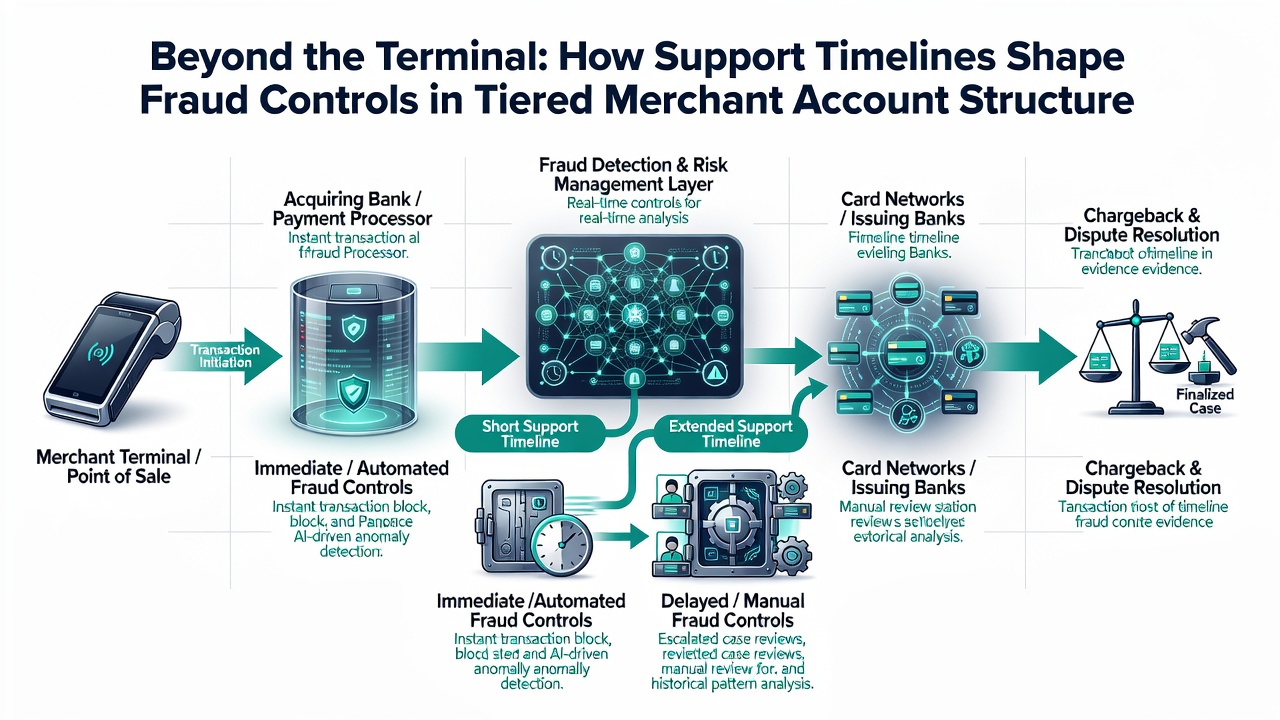
Tiered pricing models often bundle support commitments with fraud prevention services, which creates measurable differences in how quickly anomalies trigger interventions. Accounts assigned to elevated tiers benefit from dedicated response teams that operate under longer contractual windows, allowing iterative refinements to machine learning models used for transaction scoring. Data shows that these arrangements correlate with lower rates of undetected fraud because adjustments occur after comprehensive review rather than immediate rollout.
Shorter timelines, by contrast, push processors toward automated deployment of standardized controls that apply uniformly across lower-risk accounts. Those who have analyzed processing logs find that this approach maintains baseline protection without requiring extensive customization, yet it leaves less room for addressing niche threat vectors that appear in specific merchant categories. And the distinction becomes clearer when examining chargeback trends across regions, where extended support correlates with steadier declines in disputed transactions.
Regional Variations in Implementation
Processors operating under frameworks established by bodies such as the Federal Reserve adjust timelines to match local regulatory expectations, while counterparts in other markets follow guidelines from organizations like the European Central Bank. These differences produce varied outcomes in fraud control effectiveness, since support durations must accommodate both domestic reporting requirements and cross-border transaction monitoring. Studies from academic institutions have documented how alignment between regional standards and support schedules influences the speed at which new detection parameters activate.
Merchants in tiered structures experience these variations through their contract terms, and data collected across multiple jurisdictions indicates that consistent support availability reduces the lag between threat identification and control activation. What's interesting is how processors in Australia and Canada have adopted hybrid models that blend fixed and flexible timelines to accommodate fluctuating risk profiles without disrupting core operations.
Conclusion
Support timelines function as structural elements within tiered merchant account frameworks, shaping the responsiveness and customization level of fraud controls across different risk categories. Evidence from payment processing data demonstrates that extended durations enable more precise refinements in higher tiers, while shorter cycles sustain efficient baseline protections in lower tiers. As payment environments continue evolving, the coordination between these timelines and fraud mitigation strategies remains a central factor in maintaining secure transaction flows for merchants operating at every level.